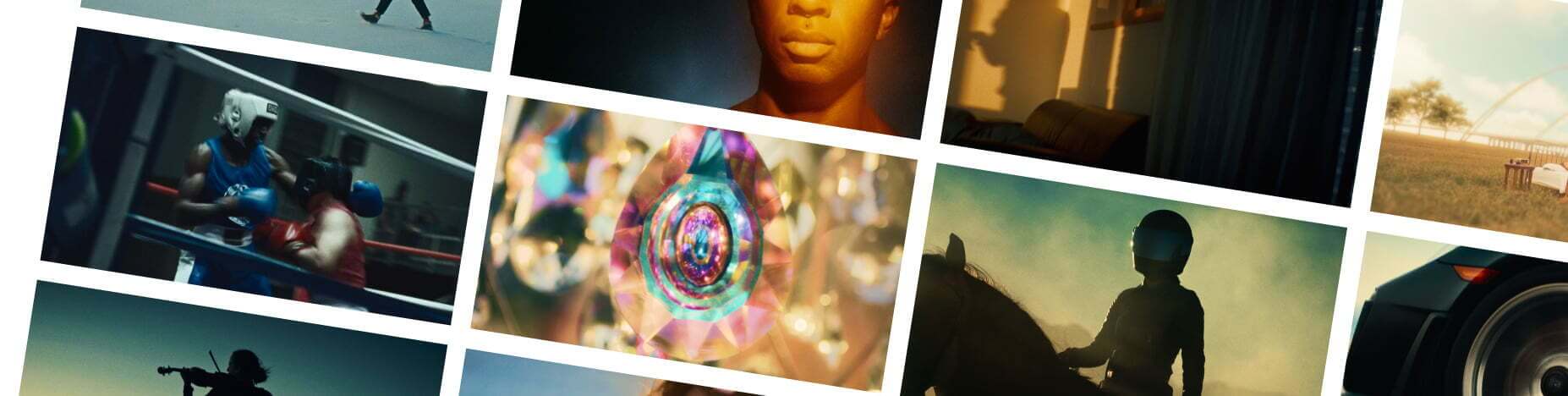
For the Oakley-commissioned Factory Team, director (and Filmsupply filmmaker) Anastasja Black and cinematographer Rowan Biddiscombe had three shoes, limited resources, and a film to build all of it.
No models, no feet.
The finished piece reads as VFX from end to end, and about half of it isn’t. There’s a silver cage somebody built by hand, a probe lens crawling over the sole of the shoe, and one shot the two of them went back for on their own time, in his office, with a needle and a piece of string.
For the episode of Behind the Work, we spoke with Anastasja and Rowan about the Oakley Factory Team film: what’s practical, what’s CGI, and the shot they went back for on their own time.
RELATED READS: Do What Works: Editor Alex Morrison on Cutting Oakley’s Big NFL Announcement
The Brief Was a Question
“The goal was to make something where the shoe is the focus,” Anastasja says. “We don’t want any models. We just want to come up with really cool ideas for how we can have the shoe, but not a normal product shot.”
Three shoes, three worlds, one film. “How can we have three different shoes and then create a world for each to stand out on its own, but also still fit together?”
The treatment stayed thin on purpose. “We were like, ‘Okay, let’s just collect ideas and put them into the doc and then see on the day, because we also wanted to keep it quite open creatively,’” she says.
Rowan frames the problem in terms of the scroll. “It takes something quite impactful to stop you and be like, oh, that’s interesting, for five seconds. How can we make a shoe be interesting with limited resources at our disposal?”
RELATED READS: How Tucker Bass Turned a Craigslist Gig into a Thriving Career in Editing
Half of It Is Real
“I think now it’s 50/50. But that wasn’t the idea in the beginning,” Anastasja says. “The more we were in the edit, we were like, ‘Okay, it needs that, it needs this bit.’“
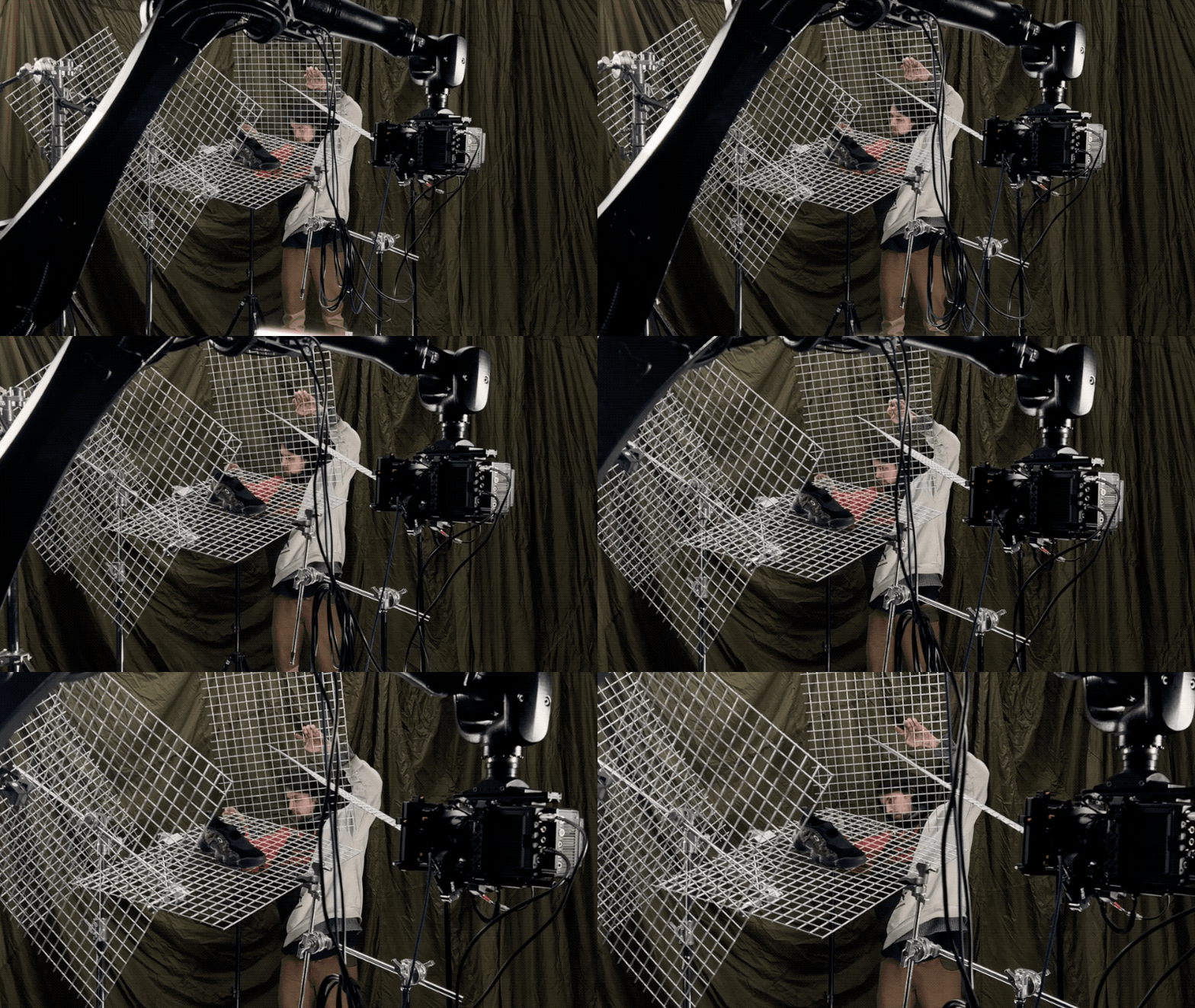
The setup that looks most like a build is the one that isn’t. “In the silver cage, the shoe in the middle and the chains connecting the cage with the shoe—that’s all practical,” Anastasja says. “That’s all that Rowan built.”
The handoff runs the other way, too. “There’s that real close-up shot of the sole of the shoe,” Rowan says. “It kind of goes into the effects after that, and maybe you didn’t realize that it was a real shot to begin with.”
A probe lens through the ridges of the sole, shot straight. The spin came later, the morph after that.
Rowan treats that as the method rather than the exception. “You can’t script everything. Sometimes you can just look at what you’ve shot and say, ‘You know what would be cool if we could do this?’ Ask the question if it’s possible, and if it is possible, let’s do it.”
The last frame of the film is Anastasja’s. The plan had been a graphic laid over the picture until she saw something better a few days out. “I saw those art pieces that are 3D, so depending on where you stand, you see the picture, or you don’t,” she says.
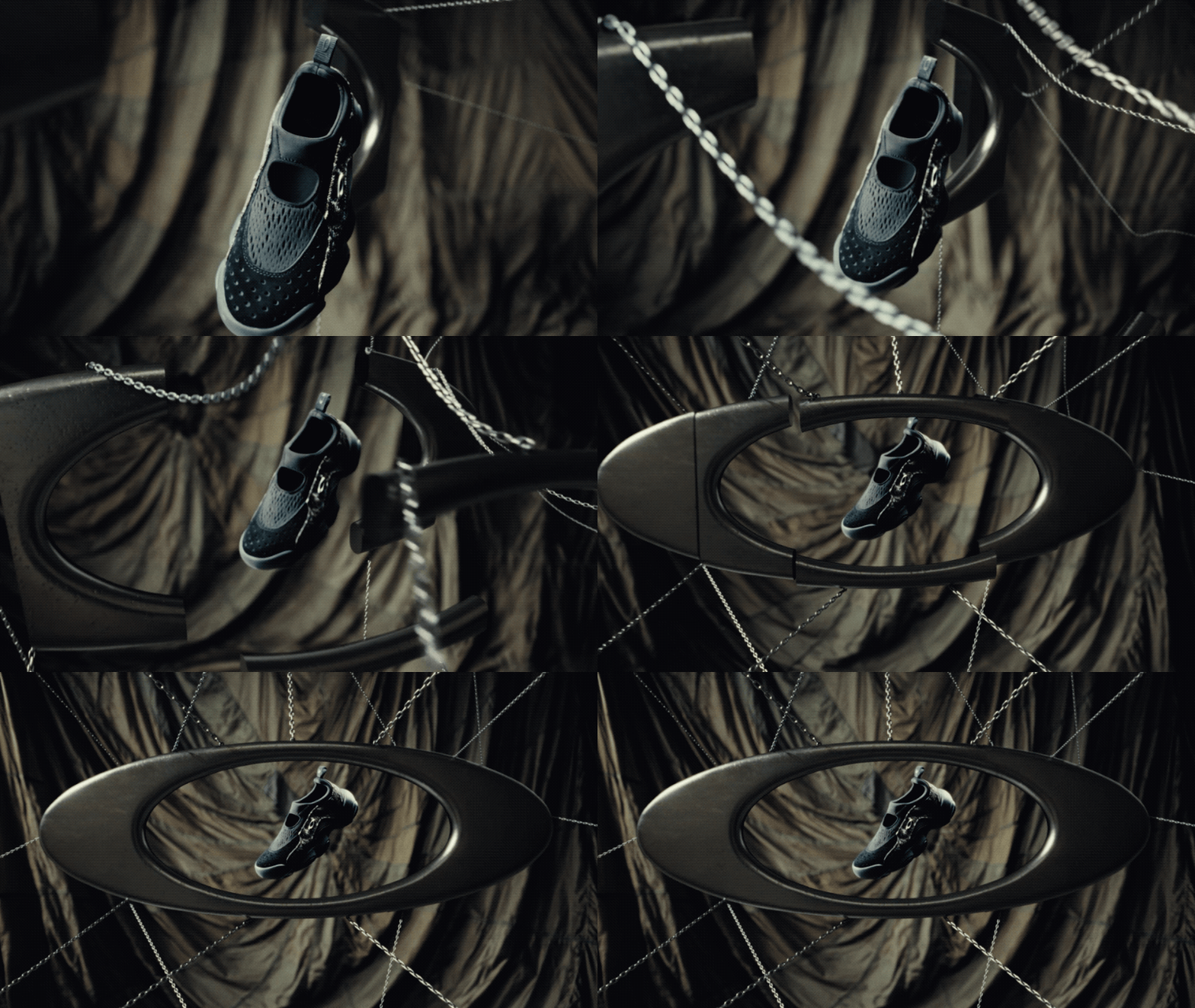
“When it’s in the final position, you actually see what it’s formed a perfect Oakley model.” They tried to build it practically and gave up working out where every piece would have to sit. The shoe, the backdrop, and the move are real; the assembly is VFX.
RELATED READS: The Practical Side of Commercials and Title Sequences with Christopher Webb’s FX WRX
The Shot They Went Back For
“Once you have two people saying it’s not good enough, it’s way easier to push for the better ideas,” Anastasja says. “A lot of the time, everyone else thinks it’s fine, and then you’re the bad guy saying, ‘No, we need to spend more time.’“
Rowan’s half of that standard came from someone else. “Somebody once told me that, to be a good DP, you need a really good bullsh*t meter. You need to be able to look at something you’ve shot, that you spent a lot of time on, that you put money into, and be able to say that’s not good enough.”
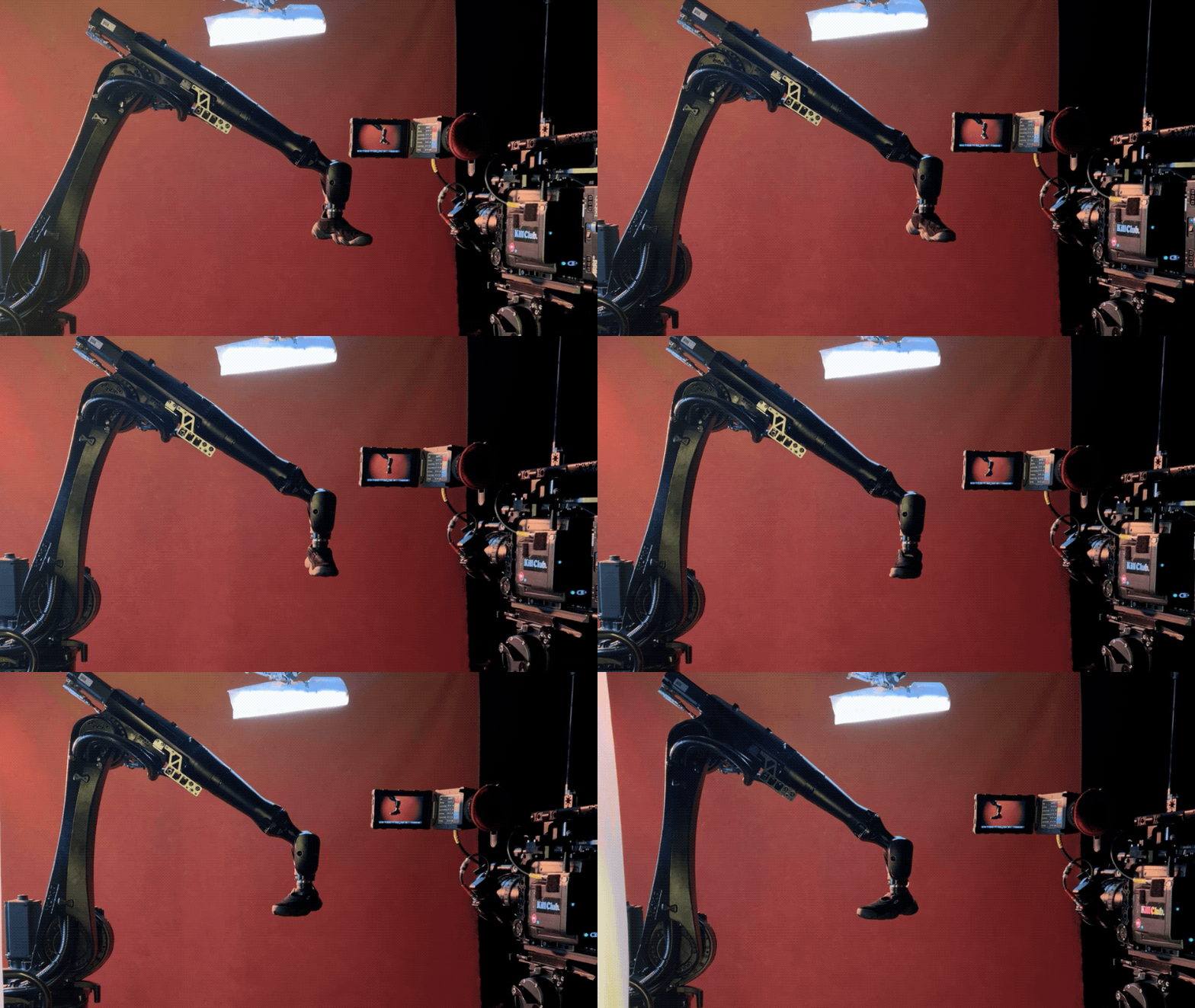
The rotating shoe wasn’t on the day. They ran out of time and told themselves the film would be fine without it. Then they watched the edit.
“We need that. We really need that extra thing in there,” he says. “I’ve still got the shoes and I’ve got a camera. Let’s just add it in and nobody needs to know that it didn’t happen on the day.”
Nobody was paying for it. They went into his office the next day and shot it themselves.
“We put a needle at the tip of the shoe and then just had a string, and then just let it rotate,” Anastasja says. Two hours, all three shoes, hanging vertically.
RELATED READS: Behind the Work: Mason Charles and Nick Nelson on Turning a Garage Into a Desert Dream
Why They Keep Creating
“Most of the time, you’re just so grateful that this is actually your job. It’s like a playground for adults,” Anastasja says. “You’re coming up with ideas, someone is doing it, and then you do a shot out of it. And then two months later, you’re like, ‘That’s crazy. I just had that idea in my head, and now I’m looking at it.’“
For Rowan, the same thing decides what the work looks like.
“As soon as I started trying to make something for somebody else, that’s when it wasn’t good anymore,” he says.
“As soon as I realized I was doing that, I just started trying to do things that were in line with what I like, with what I’m passionate about. You find that your approval rates go up massively. People are like, ‘Yeah okay, I can feel the genuine love for this piece’.“
“Every time I create something, there’s a part of my mind that is still sat in that original passion I had.”
Explore footage from Factory Team, available to license on Filmsupply.
—
About Behind the Work
Behind the Work is an original series from Filmsupply that takes audiences inside the real projects behind our footage, created by in-demand filmmakers on our roster.
Each installment explores the creative decisions, production challenges, and defining moments behind the work, showing how the craft of real filmmakers becomes footage available to license on Filmsupply.