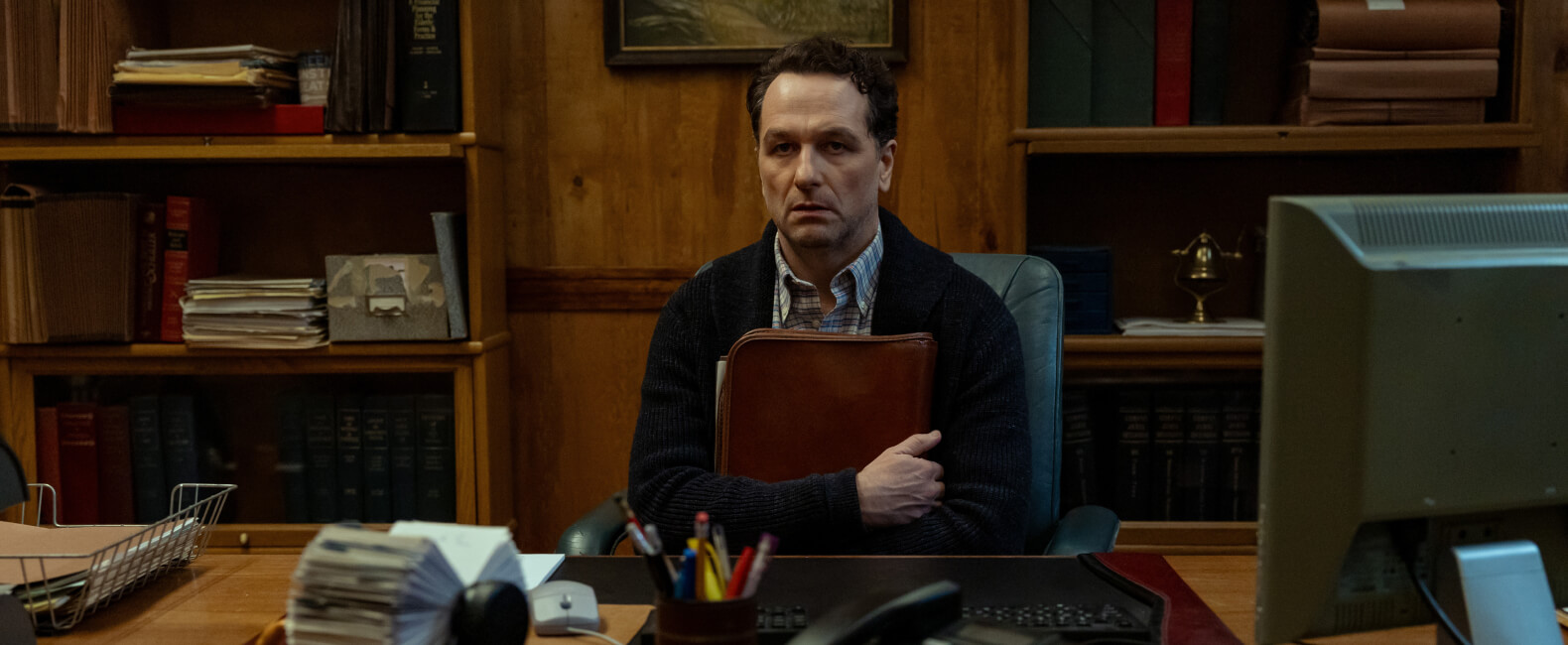
From David Lynch and Mark Frost’s Twin Peaks to the Duffer Brothers’ Stranger Things, some of television’s most memorable towns have never existed on a map. Apple TV’s Widow’s Bay continues that tradition with an isolated New England island shaped by local history, superstition, and the people who call it home.
The series follows a skeptical mayor trying to revive the town despite residents’ warnings that it’s cursed. That premise allows Widow’s Bay to move between horror and comedy, and the stranger parts of the story work because the town around them feels so believable.
Widow’s Bay has its own weather, local businesses, traditions, tensions, and shared history. The harbor is connected to the people who work there. The Salty Whale appears to have served the same regulars for decades. Even the ominous fog seems to belong to the island.
For us at Filmsupply, that is what makes the series especially interesting. Widow’s Bay builds its fictional world from real locations and practical details: changing weather, familiar routines, and places that already carry signs of a life beyond the story. Those are also the qualities that make authentic footage so useful to filmmakers and editors.
Three parts of the show’s approach stand out.
Real locations give Widow’s Bay a history.
Creator Katie Dippold intentionally leaves the town’s precise location unclear. The island could sit somewhere off Massachusetts or farther north near Maine, but what matters is that it feels distinctly New England.
The production filmed across several real Massachusetts communities, including Rockport, Gloucester, Worcester, and Essex. Harbors, beaches, restaurants, town halls, and neighborhood businesses from across the state became pieces of one fictional town.
-2.gif)
Those locations arrive with details that would be difficult to invent. Weathered buildings, gray skies, and cold water all suggest a community shaped over generations. By filming in real places, the production gives Widow’s Bay a history without having to explain it all.
RELATED READS: Capturing the Wild of Yosemite: How Filmsupply Helped Bring Netflix’s “Untamed” to Life
That history also makes the supernatural elements easier to believe. Once the everyday world feels true, audiences are more willing to believe that something stranger may be hiding within it.
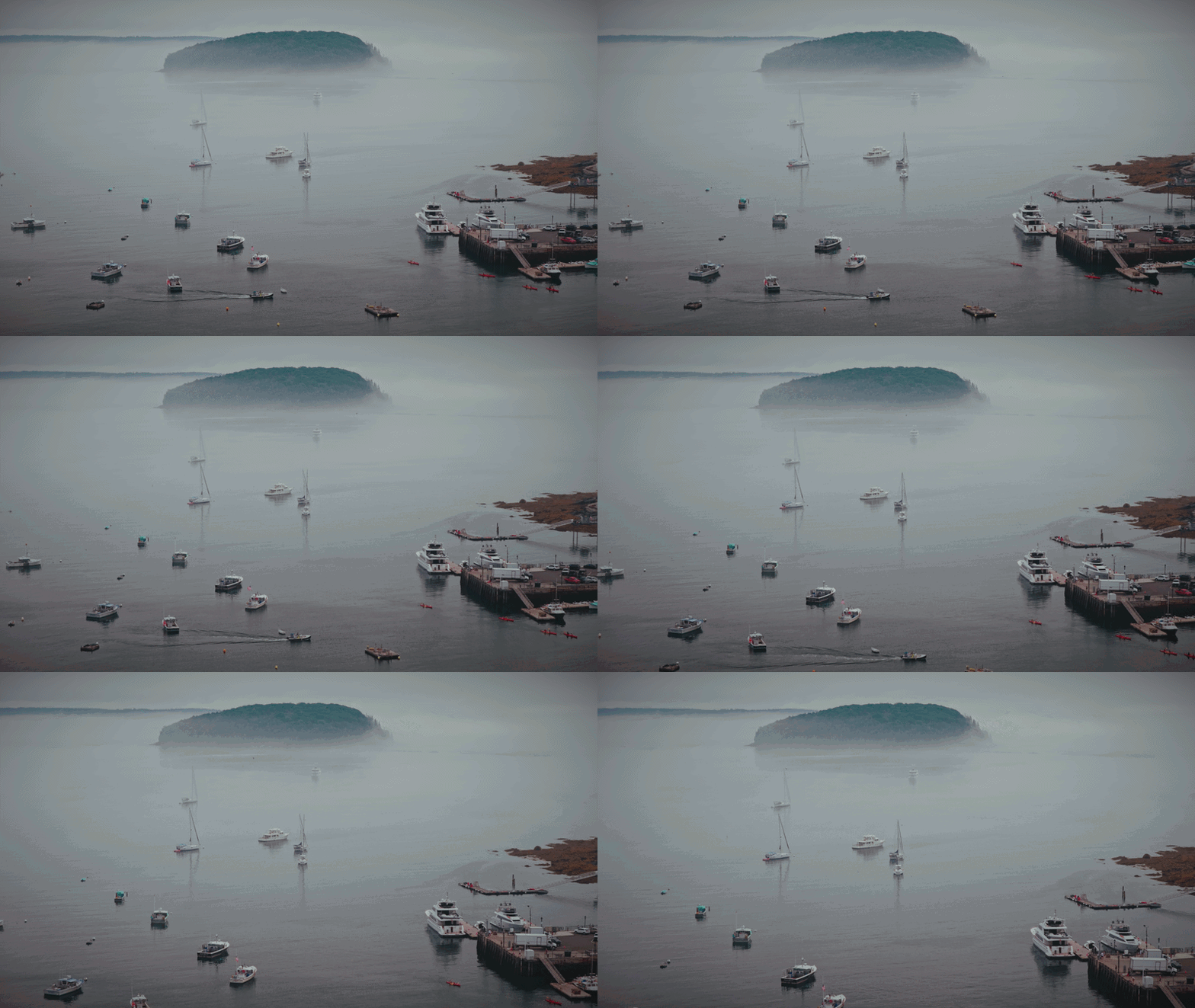
In his Maine and New England Coastal Foggy Aerials shoot, filmmaker Ed David captures fog moving across the harbors, islands, lighthouses, and coastal towns of Maine and New England. The footage makes the region feel inviting and difficult to reach, with communities tucked between the land and water.
It’s easy to imagine these real places becoming part of the fictional Widow’s Bay. The coastline establishes isolation, while boats, homes, and harbor lights show the life continuing within it.
People show us what life there looks like.
Geography can tell us that a story takes place on an island, but it can’t show us what it means to call that island home.
That understanding comes through in smaller details: how people dress for the weather, where they gather, what keeps the town running, and the routines they follow every day. Even the objects inside a home or tavern can suggest how long someone has been there.
-2.gif)
Widow’s Bay fills its town with diners, homes, local businesses, community events, and residents who appear to have known one another for years. The island becomes believable because the show considers how people live within its boundaries.
RELATED READS: Creating Immersive Worlds: Why “Chief of War” on Apple TV Used Filmsupply
Authentic footage can provide those same details. A complete shoot can follow people through a shared location or experience, showing how they move through their surroundings and relate to one another.
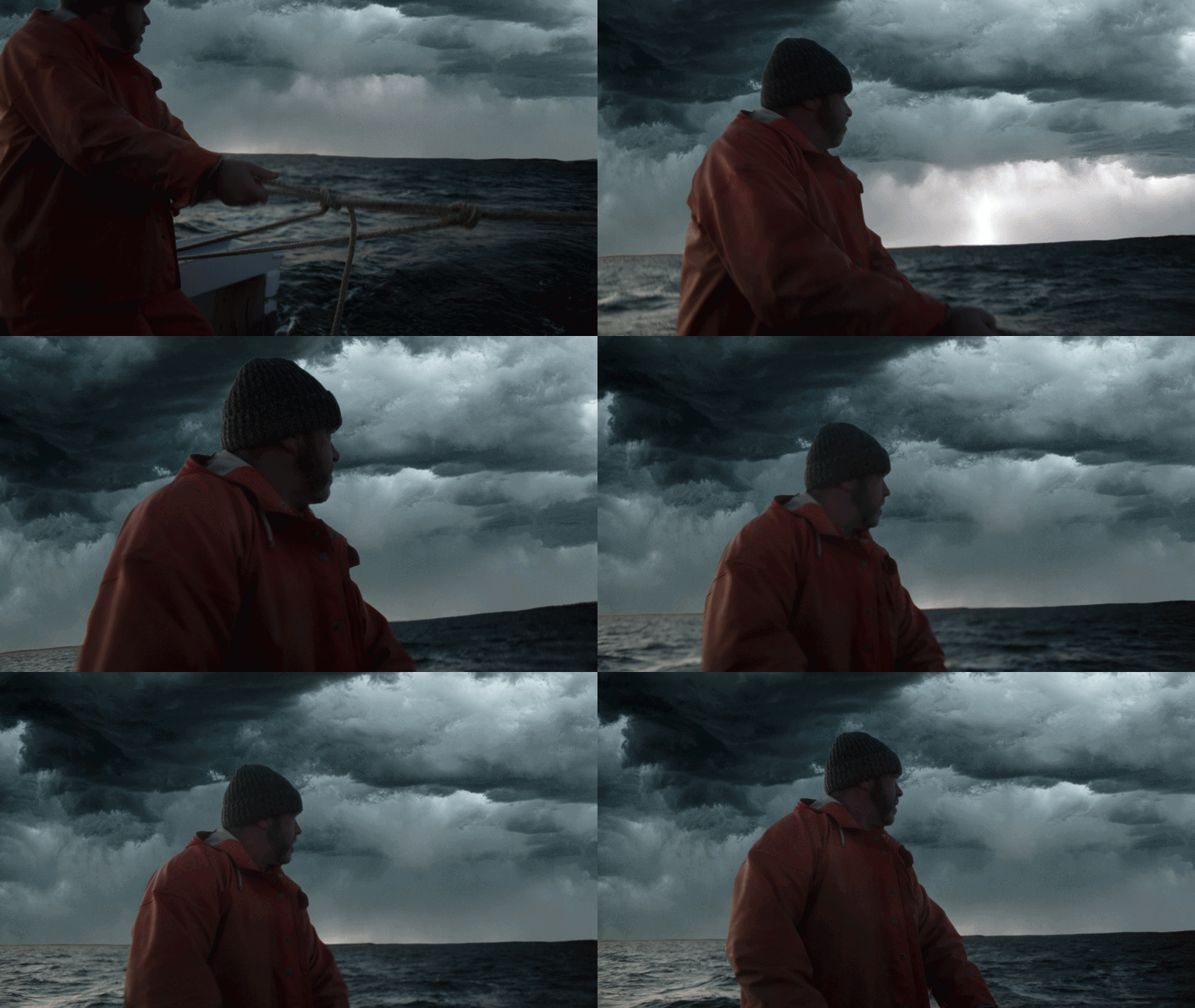
In filmmaker Connor Carroll’s Let the Light Lead You Home, a fisherman is caught in a storm, and his son tries to guide him home. Moving between the father at sea and the son waiting on shore, the footage shows how closely life in a coastal community is tied to the water.
For Widow’s Bay, the ocean also acts as a natural perimeter. It defines the island, separates its residents from the outside world, and makes leaving more difficult (and life-threatening). In both stories, the water shapes how people work and connect while also keeping them apart.
Weather can make the familiar feel strange.
In Widow’s Bay, weather does more than solely establish the season. Fog hides the coastline, limits visibility, and signals that the island may be waking up.
Because the town already feels familiar, those changes have a greater effect. A harbor, road, or house can become unsettling without anything physically changing. The audience simply sees it under different conditions.
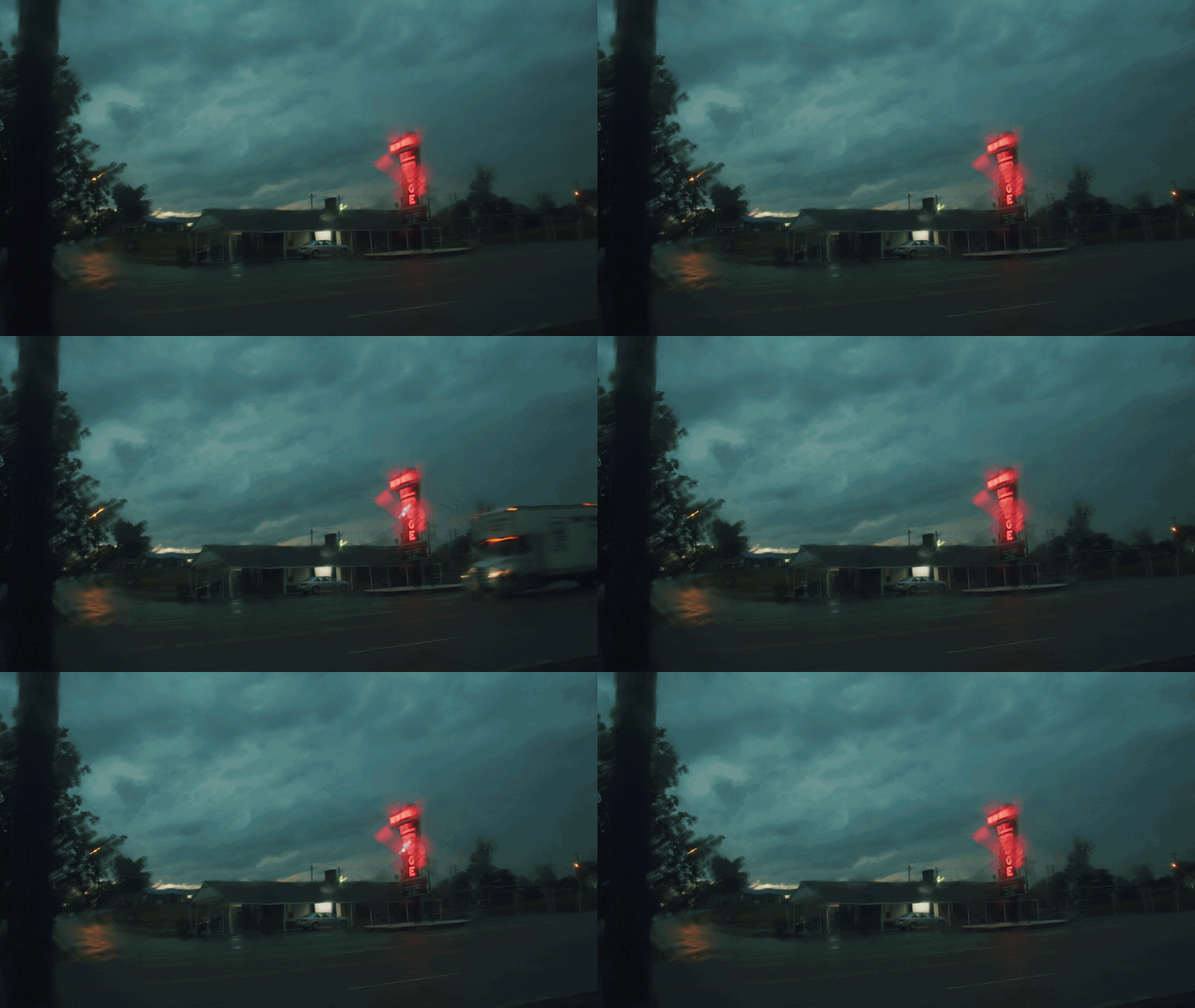
Real weather brings that uncertainty into footage naturally. Rain moves across glass, fog obscures the distance, and light changes before a filmmaker can completely control it. Those conditions can alter how a location feels while preserving the details that make it recognizable.
Filmmaker Henry Busby’s shoot Driving Through Rain in a Small Town captures a small town through a rain-covered car window, passing quiet roads, rural homes, and familiar places blurred by the weather.
-Sep-16-2026-05-34-55-3335-PM.gif)
The town itself hasn’t changed, but the rain makes it feel more distant and uncertain. That subtle shift fits the world of Widow’s Bay, where the everyday and the unsettling often exist side by side.
Make the setting part of the story.
The world of Widow’s Bay works because every choice appears to come from the same place. The coastline creates isolation. The people give the town a daily rhythm. The weather allows familiar streets and buildings to become uncertain.
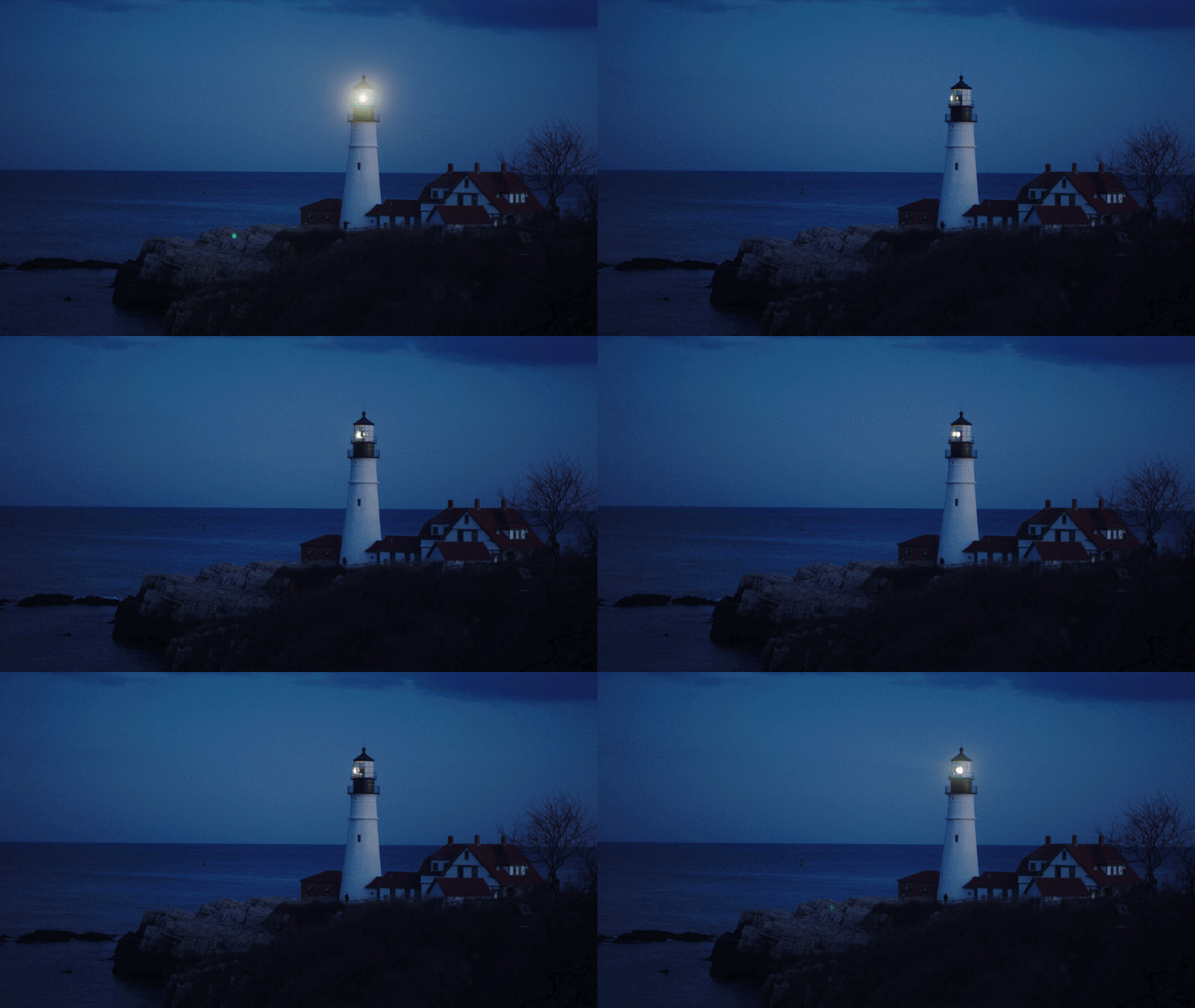
The same thinking can guide a search for footage.
Look beyond the image that communicates the plot and consider the world around it. Where do these people live? How do they move through their surroundings? What does the weather change? Where does the community gather? What suggests that life continues when the story isn’t following them?
RELATED READS: Wild, Untamed, Treacherous: How Filmsupply Helped Form the World in “Predator: Badlands”
Real locations, people, and conditions give filmmakers details they do not have to create on their own. When those details belong together, even a story about an (allegedly) cursed island becomes easier to believe.
—
Explore the Widow’s Bay-inspired collection on Filmsupply.